Major Arcana 11
Justice: tarot card meaning
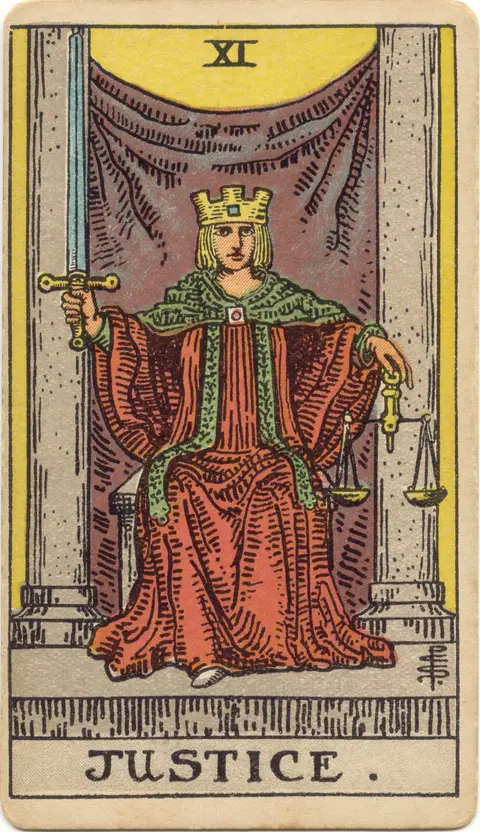
What the card shows
A crowned figure in a red robe and green cloak sits between two grey pillars, with a purple curtain hanging behind. One hand holds a sword pointing straight up, the other holds a pair of small scales. The gaze is level and calm.
Deck: the 1909 edition, illustrated by Pamela Colman Smith.
Upright meaning
balance, honesty, accountability, clarity, fair measure
Justice asks you to weigh a situation calmly and on its merits. The sword stands for a clear decision, and the scales for balance between what you put in and what you got back. The card may point to a moment to look honestly at your own part in a disagreement, repay something you owe (time, an apology, promised help), or call things by their proper names. Picture a talk with a neighbor about who sweeps the shared courtyard: Justice suggests hearing both sides, then saying plainly what you think is reasonable. It invites ownership of your choices without self-blame.
Reversed meaning
bias, harshness, double standards, dodging responsibility, judging unheard
Reversed, the card can describe a lopsided view: judging by mood, using one standard for yourself and another for everyone else, or shutting out facts you dislike. It can also run the other way, where you are so hard on yourself that a mistake from years ago still carries a daily sentence. Check whether you apply the same rules to yourself and to people close to you. If someone took more blame than they earned, consider whether an honest conversation could put it right.
In love and relationships
In relationships the card is about balance in everyday things: who calls first, who usually gives way, who remembers the in-laws' birthdays. A calm talk about it often does more than a stored-up grievance. The card can also point to honesty with yourself: what you expect from your partner, and whether you have said so directly. When deciding about someone new, give their actions as much weight as their words.
At work
At work the card relates to a fair division of load and responsibility. A useful question is whether you are doing your share, and whether others do theirs. If you manage people, rules applied the same way to everyone earn more respect than favorites. If you report to someone, consider pointing out calmly, with facts, what in your role is overloaded. Write decisions down and explain them briefly.
A question for yourself
Do I hold myself to the same standard I hold the people around me to?
For entertainment and reflection. The cards do not predict the future and do not replace a doctor, lawyer or financial adviser.
What tarot is: its history and why it is not a forecast
Which card is yours today?
One card a day, free and with no sign-up.
Reveal my daily card